Co-Creating the Future of Citizen Science: Inside the RIECS-Concept Open Source Workshop
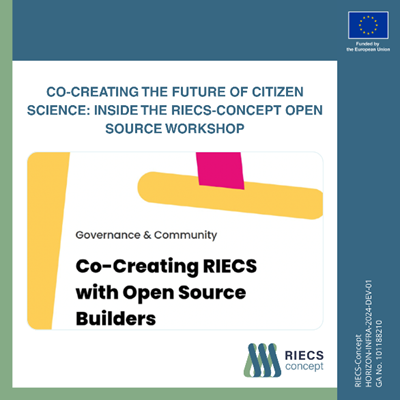
📢 On March 16, 2026, a diverse group of open-source builders, researchers, and citizen science practitioners gathered in Berlin during FOSS Backstage 2026 for an interactive workshop titled “Co-Creating RIECS-Concept with Open Source Builders.”
✳️ The session marked an important step toward shaping the future of citizen science infrastructure in Europe.

Why Open Source Matters for Citizen Science
✳️ Citizen science thrives on collaboration, transparency, and accessibility – values that align closely with open-source principles. From data collection platforms to participatory research tools, open-source technologies enable communities to actively engage in scientific processes. However, building and sustaining such systems requires more than code – it demands governance structures, long-term support, and shared standards.
📍 This workshop recognised that open-source developers and maintainers are not just contributors but central architects of the citizen science ecosystem.
✳️ By bringing them together with researchers and community organisers, the event aimed to bridge technical innovation with real-world societal needs.

A Participatory Approach to Infrastructure Design
✳️ The 60-minute workshop was designed by Kai-Ti Wu and Franziska Stressmann (ECSA) as an interactive session, encouraging participants to actively contribute their experiences and insights. The agenda included:
⚫ Welcome & Framing (14:00–14:10): Introduction to the RIECS-Concept and its vision for a European research infrastructure for citizen science.
⚫ Participant Stories (14:10–14:50): Sharing experiences from open-source citizen science projects.
⚫ Synthesis & Next Steps (14:50–15:00): Identifying priorities and opportunities for engagement in RIECS-Concept.
✳️ Rather than a one-way presentation, the session emphasised co-creation – inviting participants to reflect on what works, what doesn’t, and what is needed to build sustainable, trusted infrastructures.
Key Themes and Insights
✳️ Several critical themes emerged from the discussion:
⚫ Sustainability of Open-Source Tools: Projects often struggle with long-term maintenance and funding.
⚫ Governance Models: Clear structures are needed to ensure transparency, inclusivity, and accountability.
⚫ Community Support: Successful citizen science platforms depend on active and engaged communities.
⚫ Interoperability and Standards: Harmonised systems are essential for scaling across Europe.
✨These insights will directly inform the conceptual development of RIECS-Concept, ensuring that the infrastructure reflects the needs of its users.

Building RIECS-Concept Together
✳️ The workshop was organised by the European Citizen Science Association (ECSA) as part of the RIECS-Concept project, funded by the European Union’s Horizon Europe programme. As emphasised by the organisers, the initiative is not being built in isolation; it is a collaborative effort shaped by its community.
✨ “Join the conversation and let’s build RIECS-Concept together!”✨
This call to action highlights a core principle of the project: participation is not optional; it is foundational.

Looking Ahead
✳️ The Berlin workshop represents just one step in a broader process of co-creation. As RIECS-Concept continues to evolve, ongoing engagement with open-source builders, researchers, and civic tech communities will be essential.
✨ By aligning technological innovation with participatory values, RIECS-Concept has the potential to become a cornerstone of citizen science in Europe – empowering communities, advancing research, and strengthening the connection between science and society ✨
Published 2026-03-17